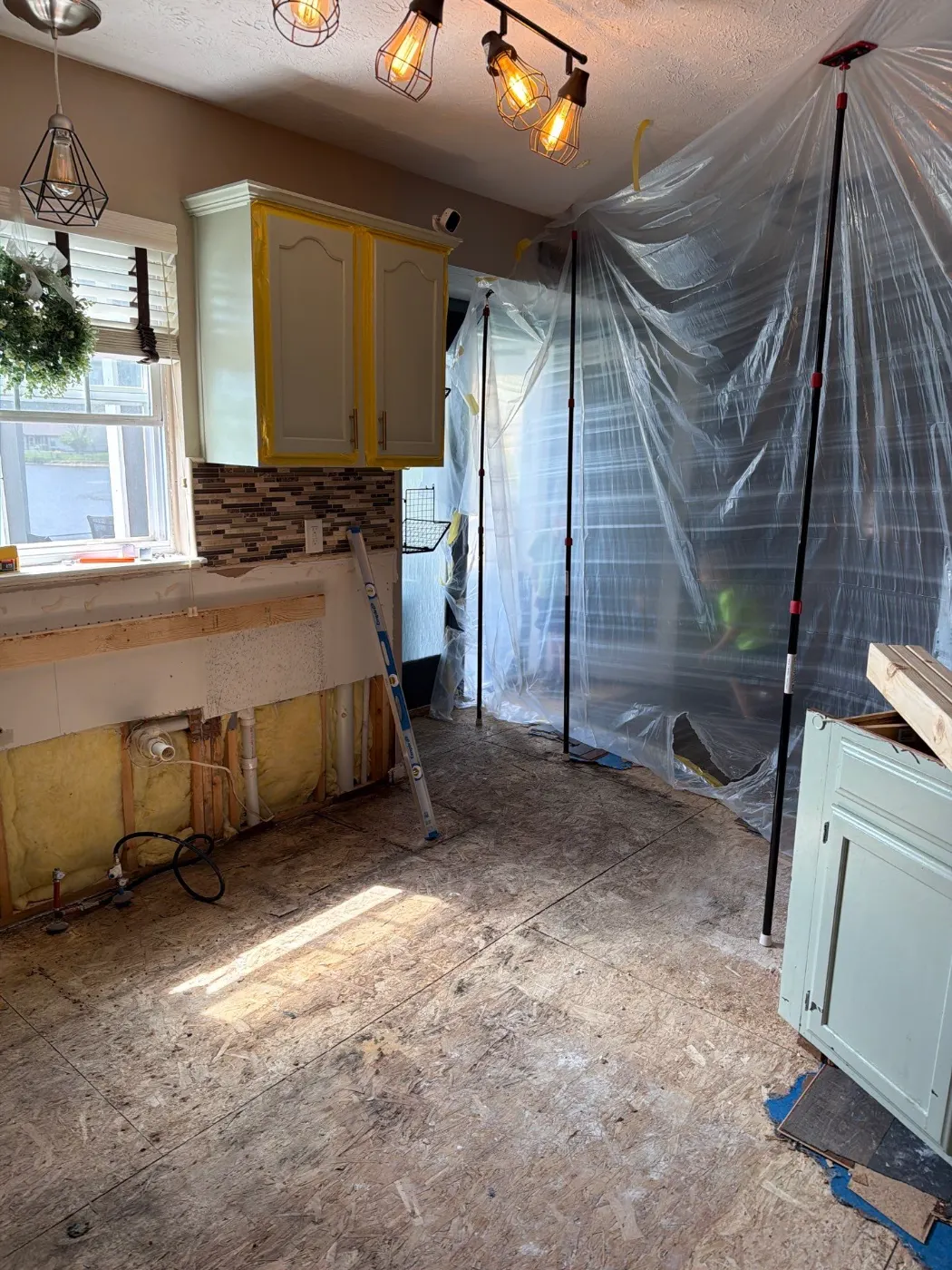
Commercial Mold Remediation in Clay City, IN
Tenant complaint in Clay City? Moisture survey, a written scope to the IICRC S520 and containment before anything gets opened.
Clay City Water Restoration provides Commercial Mold Remediation in Clay City, IN. IICRC certified crews, scheduled assessment, and a written scope before work begins. We work with your insurance carrier on approved claims. Call (812) 515-1567 to schedule.
- Service: Commercial Mold Remediation for Clay City homeowners
- Service area: Clay City, IN and surrounding areas
- Response time: Next available appointment, usually within a business day
- Licensed and insured (License #RC21100059)
- Serving Clay City, IN since 2018
Commercial Mold Removal in Clay City
We handle commercial mold removal throughout Clay City, and we'll find the moisture source before the scope is written.
Moisture Sources Here
Buildings near the Eel River can take on floodwater, and anything left wet afterward can grow mold. We'll go over the air handling and any past leaks on the first walkthrough with whoever runs the building.
We take commercial mold jobs anywhere in Clay City, including the streets around the Main Street business district. We also handle commercial mold work in Staunton, Knightsville, Carbon and Bowling Green.
Commercial Mold Remediation for Clay City Businesses
Several complaints from one corridor in the same week is a pattern worth taking seriously. Shared plenums, common wall cavities and a single roof drain can put the same moisture problem behind four different suites. Clay City Water Restoration investigates across the whole affected area on Clay City commercial properties and treats the complaints as one problem, because remediating one suite while the water keeps feeding the next one wastes the money you spent.
On every mold job Clay City Water Restoration runs in Clay City, containment goes up before anything gets disturbed. The crew seals the work area, builds a decontamination entry and holds negative pressure with HEPA filtered machines, and a manometer confirms it's holding. Moving spores through an occupied building is the mistake that's hardest to undo, so the barrier comes first.
Documentation runs parallel to the physical work the whole way through. Clay City Water Restoration crews log moisture readings by location and date, photograph containment, affected assemblies, removal in progress and cleaned surfaces, keep disposal records for the bagged material, and record equipment type and placement. That file is what a building owner hands to a lender, a prospective tenant or their own counsel when somebody asks what was done and when.
When an adjuster's estimate and a contractor's scope differ, a line by line comparison finds the reason. Clay City Water Restoration ties every item in the Clay City scope to a reading and a photograph, so both sides can see whether the gap comes from the size of the affected area or from the method, and the carrier decides what the policy pays.
Several complaints from the same corridor usually mean one moisture source feeding multiple suites. Clay City Water Restoration schedules an inspection in Clay City and investigates across the whole affected area in one pass. The scope comes back in writing with the moisture findings that justify every square foot of removal.
Signs You Need Commercial Mold Remediation
If you notice any of these in your Clay City building, schedule a free inspection before the issue worsens.
Flooring adhesive letting go in one localized patch, with tiles lifting or releasing at the edges
Tenant improvement work that stops because a contractor found dark staining inside a wall
An inspection report from a buyer's consultant that recommends remediation of one named area
Carpet tile edges curling or staying damp along an exterior wall for days at a time
Window perimeter staining that darkens after driving rain and never dries out completely
Discolored growth on the back of casework or millwork pulled away from an outside wall
Moisture meter readings that run high in a wall that looks and feels dry from the room side
A ceiling stain sitting directly beneath an upstairs restroom or break room
Snowmelt that pools at an entry threshold and keeps the wall base damp every winter
Staining on the underside of carpet or pad that shows when a seam lifts
How Clay City Water Restoration Handles Commercial Mold Remediation
We follow these steps in order on every Clay City job.
Phasing for Occupied Floors
Where part of the floor has to stay open, the work area is divided into zones that move in sequence. Each zone gets its own containment and readings before the barrier shifts to the next section.
Utility Isolation and Power Plan
Circuits and water lines that pass through the work area get isolated by the building engineer, and the crew confirms they're dead or shut before demolition. Dedicated power gets located for the negative air machines so pressure holds overnight.
Containment Construction
Poly and framing seal the work area off from occupied space, with a decontamination entry built at the access point. Every supply and return register inside the zone gets sealed so the air handling system stops moving air through it. Barriers get inspected before work starts.
Affected Material Removal
Porous material with growth in it comes out: saturated batt insulation, affected gypsum board and ceiling tile. Crews mist material before cutting, bag it inside containment, wipe the bags down, and carry them out through the decontamination entry on an agreed route.
Independent Verification
Where a building owner, carrier or tenant agreement calls for it, an outside industrial hygienist performs post remediation verification with a visual inspection and whatever sampling their protocol specifies. Containment and equipment stay in place until that party signs off on the results.
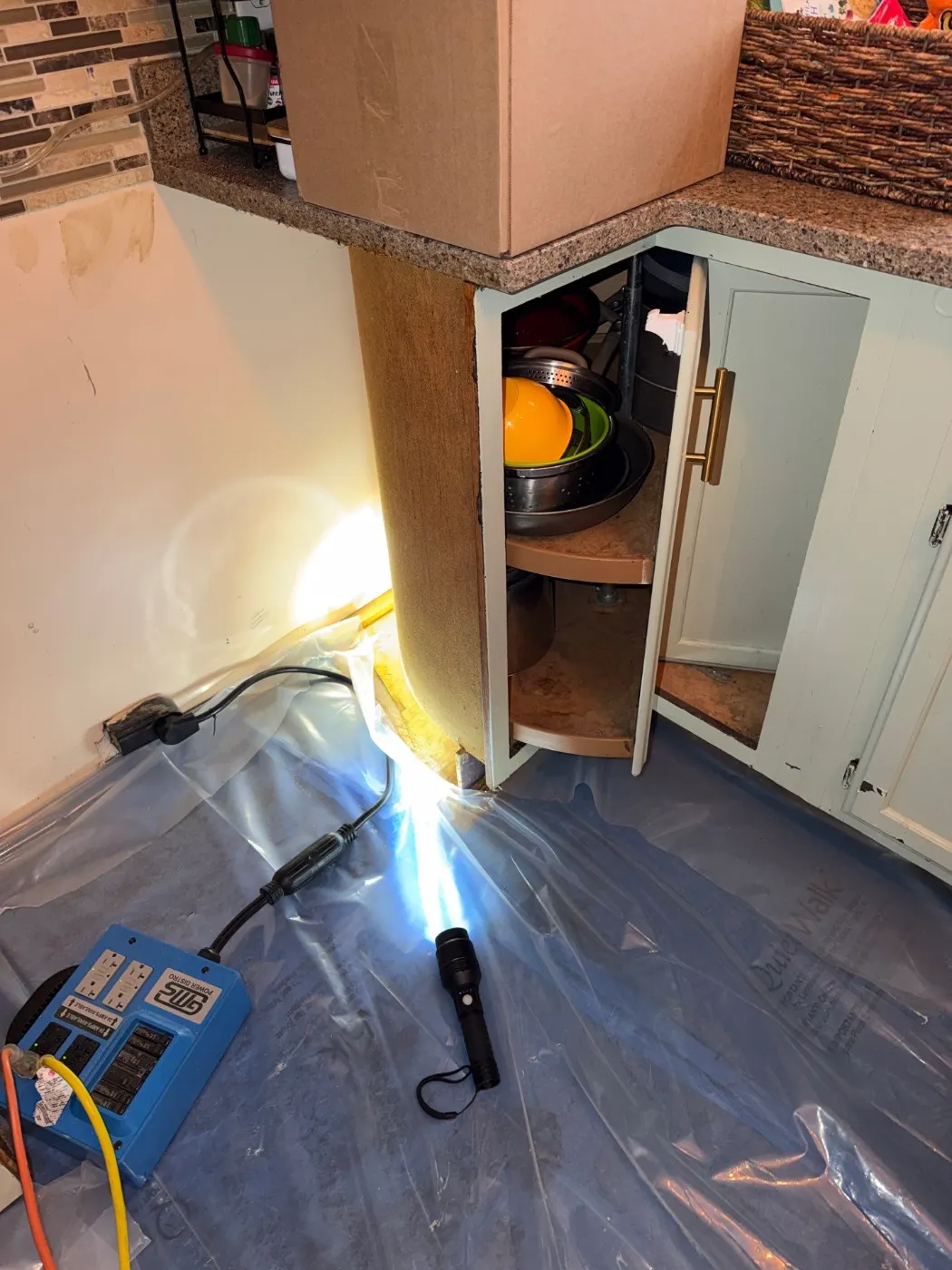
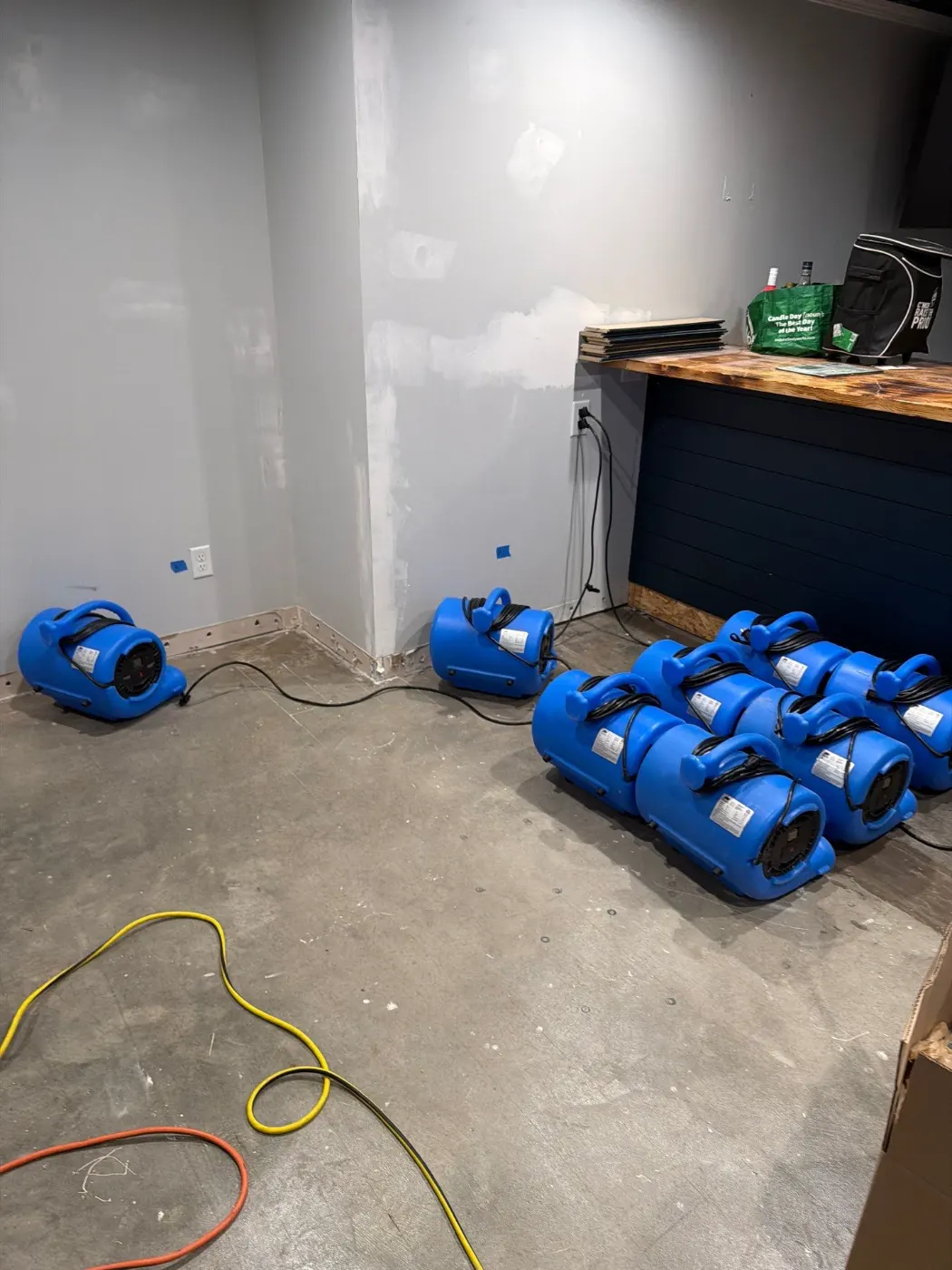
Commercial Mold Remediation in Clay City
Photographs from real commercial mold remediation jobs completed by our crew in Clay City and surrounding areas.

Commercial Mold Remediation FAQ
Questions Clay City property managers ask us about commercial mold remediation.
Guidance and Standards for Commercial Mold Remediation
- The ANSI/IICRC S520 is the published standard for professional mold remediation. The current edition is the Fourth Edition, 2024. IICRC S520 Standard
- EPA’s mold guide says the key to mold control is moisture control. EPA: A Brief Guide to Mold, Moisture and Your Home
Clay City Neighborhoods We Serve
We take commercial mold remediation calls in every part of Clay City. Pick your neighborhood for local details.
Other Restoration Services in Clay City
Clay City Water Restoration handles the full scope of restoration work. Explore our other services below.
Water Damage Restoration in Clay City
24/7 emergency response. IICRC certified water restoration from extraction to full dry out.
Learn more →Basement Flooding in Clay City
Basement water emergencies handled fast. Extraction, drying, mold prevention.
Learn more →Sewage Cleanup in Clay City
Category 3 biohazard cleanup. Full containment, decontamination, structural restoration.
Learn more →Request Commercial Mold Remediation
Reach Us Directly
Our team is available 24/7 for emergencies and ready to schedule inspections during business hours.
Need Immediate Help?
For active water or mold emergencies, call us directly. We are available 24/7.